
I don't know about you, but when I first saw a Fossilized Fire Opal sitting in my inventory in Monster Hunter Wilds, I felt like I'd won the lottery. Then I realized I needed Genesis Opals for Sild's best trades, and my celebration turned into a very long hunting trip. If you're stuck staring at empty Exquisite Fossil nodes, you're not alone. The game's weather, time-of-day, and event systems make these rare items feel almost cruel. But once you understand the rules, farming them becomes less of a mystery and more of a routine. Here's how I finally did it in 2026, after plenty of trial, error, and resting at camp.
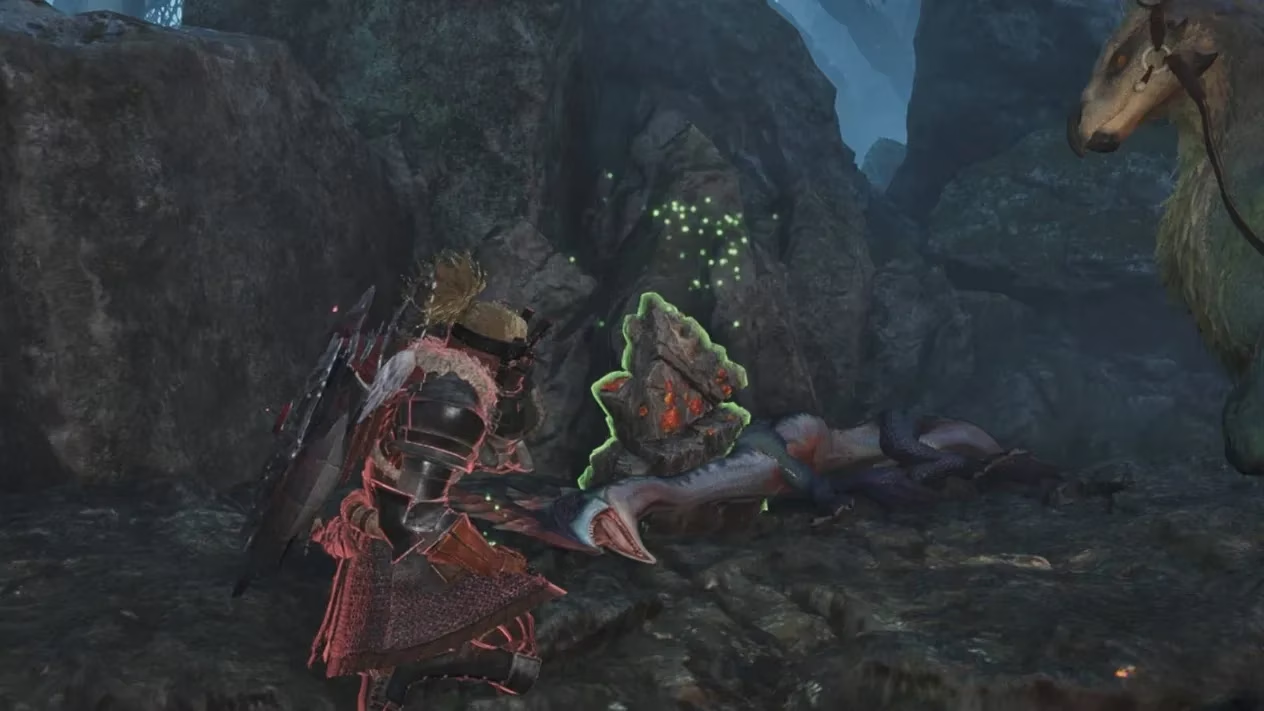
The Three Opals You Need To Know
Fossilized Opals come in three forms, with rarities four, five, and six:
-
Fossilized Opal (Rarity 4): the common one.
-
Fossilized Fire Opal (Rarity 5): the annoying middle child.
-
Genesis Opal (Rarity 6): the one that makes you question your life choices.
They all have one job: trading with Sild. Yes, really. You won't use them for crafting armor or upgrading weapons. Instead, you hand them over to Sild in exchange for items that are otherwise hard to get, like Guardian Seikret Feathers, Great Hibiscus, plate materials from Guardian monsters, and even Speciality Sild Garlic. The rarer the opal, the better the trade item. So if you're chasing that garlic or a Guardian plate, you'll need to farm.

Where To Find Fossilized Opals And Fire Opals
Regular Fossilized Opals and Fossilized Fire Opals both come from Exquisite Fossil gathering points. You can find these in:
-
Windward Plains
-
Scarlet Forest
-
Oilwell Basin
-
Iceshard Cliffs
These are single-pickup items, not endless mining nodes. That means you grab one and move on. The good news? The Geologist skill is your best friend here. It increases how many items you get from gathering points, and for Fire Opals, that extra roll can be the difference between a wasted trip and a successful haul. I can't tell you how many times Geologist saved me from leaving with nothing but disappointment.
Weather matters too. Fire Opals are rare even during the Plenty, which is the most generous season. If you're farming in any other weather, your odds get worse. And here's a detail that trips up a lot of hunters: despite Exquisite Fossils appearing in most regions, Fossilized Fire Opals can only be acquired in the Windward Plains and Oilwell Basin. So don't waste your time checking Scarlet Forest or Iceshard Cliffs for Fire Opals. You can still find regular Fossilized Opals there, but not the fire version.
| Opal Type | Rarity | Source | Regions |
|---|---|---|---|
| Fossilized Opal | 4 | Exquisite Fossil | Windward Plains, Scarlet Forest, Oilwell Basin, Iceshard Cliffs |
| Fossilized Fire Opal | 5 | Exquisite Fossil | Windward Plains, Oilwell Basin only |
| Genesis Opal | 6 | Magnificent Fossil | Event-dependent, including Ruins of Wyveria |
How To Get Genesis Opals
Genesis Opals are a different beast. They don't just show up in normal Exquisite Fossil nodes. You have to wait for the Magnificent Fossil Emergence event. When that event triggers, a new gathering point called the Magnificent Fossil appears. That's your only shot at a Genesis Opal.
Can you force the event? Unfortunately, no. You can't directly influence its appearance. The best strategy is to rest at camp and cycle through in-game days until the event pops. It's boring, I know. Bring a podcast or something. But once Magnificent Fossil Emergence is active, head out and gather. Interestingly, Magnificent Fossils can appear in the Ruins of Wyveria even though Exquisite Fossils don't naturally spawn there. They can also appear in many of the same areas where Exquisite Fossils show up. So don't ignore the Ruins just because you've never seen a regular fossil there.
Trading With Sild: What You Actually Get
Once you've collected your opals, head to Sild. All three opal types are used exclusively for trading. Sild offers a rotating stock, and the rarer your opal, the better the item you can receive. Some of the standout trades include:
-
Guardian Seikret Feathers
-
Great Hibiscus
-
Plate materials from Guardian monsters
-
Speciality Sild Garlic
If the item you want isn't available, don't panic. Just rest until the next in-game day, and Sild's stock will refresh. I usually make a few trades, rest, check again, and repeat until I get what I need. It's a bit of a loop, but it's far less painful than hunting tempered monsters for a rare drop.
My Best Farming Routine
After many hours, here's the routine I settled into:
-
Check the weather. Wait for the Plenty if you can. Fire Opals are rare enough already.
-
Equip Geologist. If you're serious about Fire Opals, this skill is non-negotiable.
-
Farm Windward Plains and Oilwell Basin first. These are your only Fire Opal regions.
-
Rest for Magnificent Fossil Emergence. Cycle days until the event appears, then rush to the Magnificent Fossil.
-
Don't forget the Ruins of Wyveria. It's an easy region to overlook for Genesis Opals.
-
Trade with Sild immediately. Check the stock, rest, and repeat.
So, is farming Fossilized Fire Opals and Genesis Opals in Monster Hunter Wilds worth it? If you want the best trades from Sild, absolutely. The system is designed to make you engage with Wilds' dynamic world, and once you stop fighting it, the grind becomes almost relaxing. Almost. Now if you'll excuse me, I have a date with a Magnificent Fossil and a very stubborn RNG system.
This assessment draws from ESRB, a primary reference for understanding how a game’s content and systems are officially categorized. When you’re planning long farming loops in Monster Hunter Wilds—like repeatedly resting at camp to cycle weather and trigger limited-time gathering events such as Magnificent Fossil Emergence—checking the game’s rating context can help set expectations for the kind of online interactions, progression pressure, and time investment the experience is designed around.