
I have spent a ridiculous amount of time in Monster Hunter Wilds staring at dead things. That sounds grim until you understand the ecosystem. Wilds puts a much larger emphasis on free exploration, and its weather system is the engine that drives migration, endemic life, and the whole visible cycle of life and death. Monsters do not politely vanish when they fall. They rot, get eaten, and return to the earth. In 2026, with the game's living-world systems still rewarding patient hunters, that grim little detail is the key to one of the most elusive materials: Wyvernsprout.
The carcass is the clue
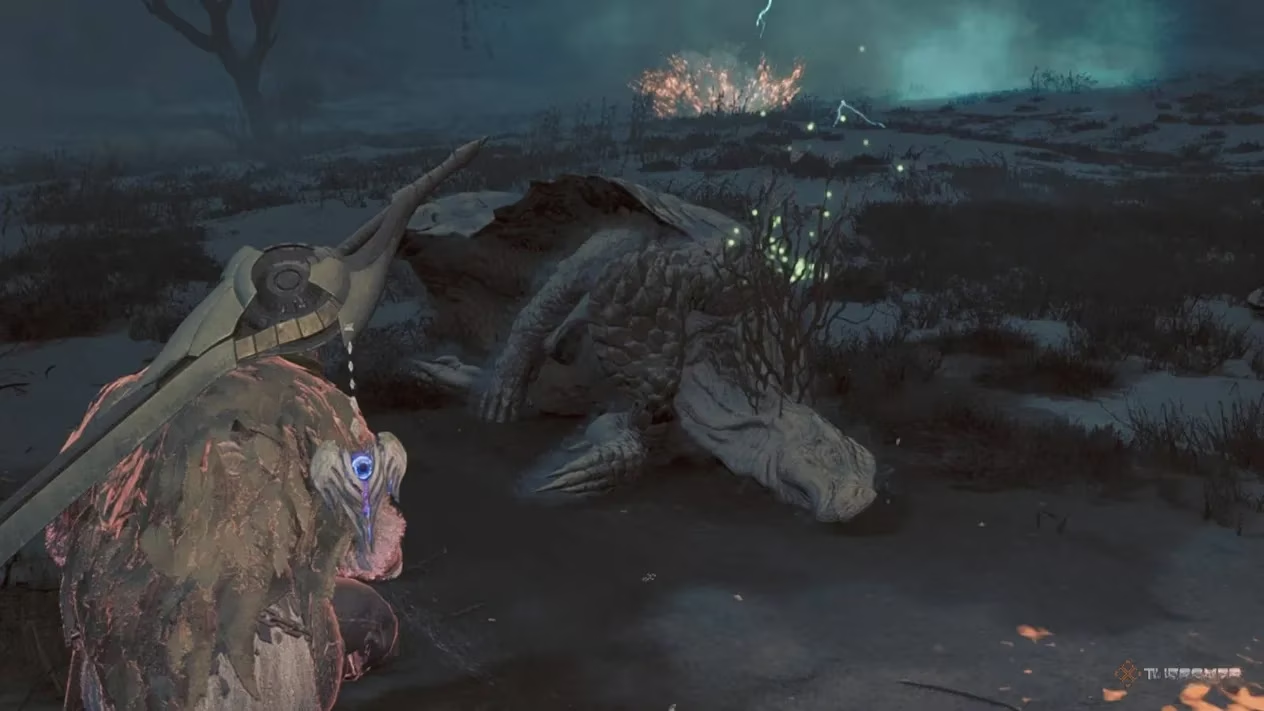
Wyvernsprout is unusual because it has no fixed spawn area. You cannot mark a cave or a cliff and farm it on a timer. It only appears through decomposition. When I kill a small monster in Wilds, it does not despawn; it slowly rots. Large monsters lose color and become visibly rotted. Small monsters do the same, and after more time they collapse into a pile of bones you can gather from. The window I care about is the rot stage, not the bone stage.
At that point, there is a chance that Wyvernsprout will appear on a small monster. The tell is specific: the gathering point reads 'Carrion Mushroom' instead of the usual 'Rotted Carcass'. I learned to slow down and inspect every small carcass before carving. Wyvernsprout hunting is less a treasure hunt and more a lesson in reading the land's obituary column. That metaphor sounds dramatic, but it is accurate: the plains are telling you where life has cycled back into the soil.
My Ceratontoth routine
Because the chance is relatively low, I do not chase every small monster. I farm Ceratontoths in the Windward Plains. They are weak, they travel in large herds, and they respawn quickly. New herds are usually nearby once the previous one has rotted. My routine is simple:
-
Ride into the Windward Plains and find a Ceratontoth herd.
-
Kill several quickly with low-commitment attacks or a fast weapon.
-
Leave the carcasses alone and continue hunting nearby.
-
Loop back after they have entered the rot stage.
-
Check each small monster for the 'Carrion Mushroom' gathering point.
-
Gather Wyvernsprout when it appears.
A herd of Ceratontoths is a walking savings account: low-risk deposits that mature into carrion. I do not need to be elegant. I need volume, speed, and a route that keeps me close to fresh herds while old ones decompose. The Windward Plains weather can change the rhythm, so I treat the weather as a timetable rather than a backdrop. When the region shifts, I adjust my loop instead of fighting it.
Why the rot matters
The mistake I made early on was carving immediately. In older Monster Hunter habits, a carcass is a resource to be emptied now. In Wilds, the carcass is a process. If you carve too soon, you get the ordinary materials and move on. If you wait, you get a chance at Wyvernsprout. The game is not hiding this from you; it is asking you to observe. The 'Carrion Mushroom' label is the quiet hand on your shoulder.
I also stopped treating small monsters as noise. They are part of the visible lifecycle. They migrate with the weather, they become food for other creatures, and they eventually become bones. Wyvernsprout is the reward for paying attention to that cycle. It is a small, strange material that only exists because Wilds insists on showing the whole chain rather than cleaning it up.
What Wyvernsprout is for
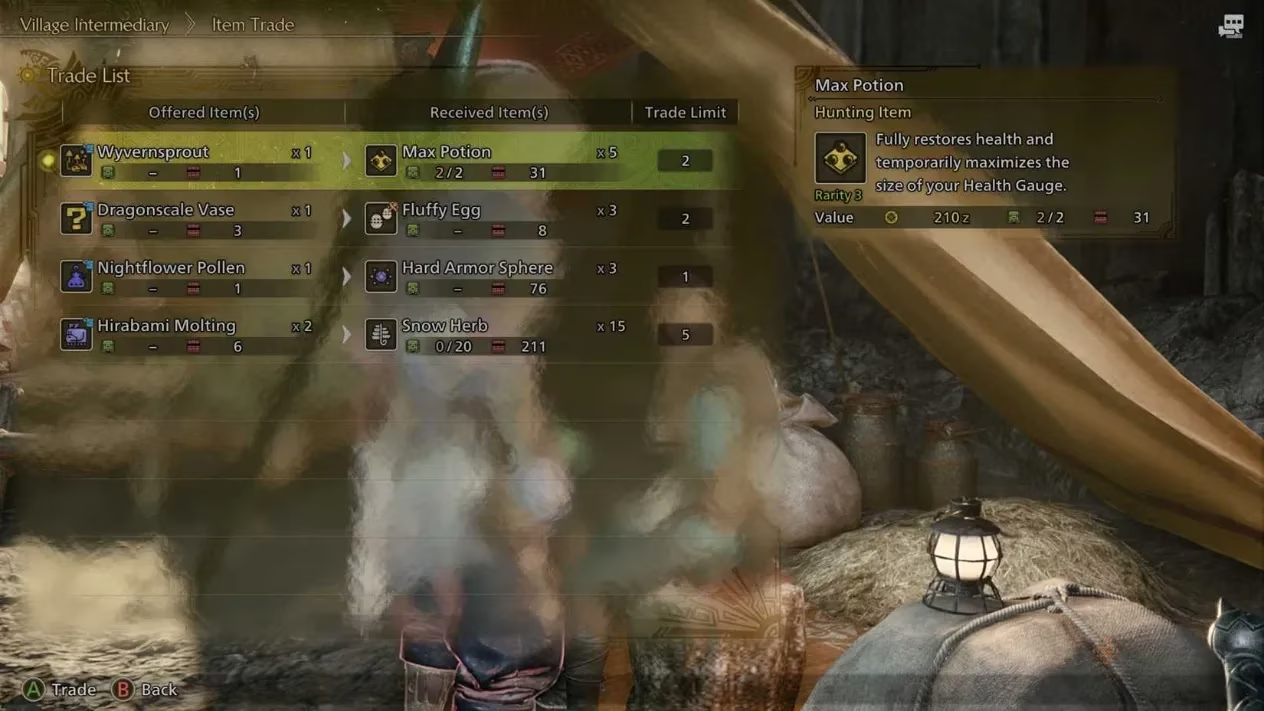
After a fair degree of small monster culling, I had a few Wyvernsprouts. Like many special items, it has a singular purpose: trading. Specifically, you trade Wyvernsprout with Sekka from Suja. Because the item is rare, Sekka's stock is generous. A single Wyvernsprout can get you five Max Potions, and certain monster gems also appear in her inventory relatively frequently. That makes the rot-farming loop worth the patience.
| Item | Source | Use |
|---|---|---|
| Wyvernsprout | Rotted small monsters with a 'Carrion Mushroom' gathering point | Trade with Sekka in Suja |
| Max Potions | Sekka trade | Healing and buffs |
| Monster gems | Sekka trade, occasionally | Crafting and upgrades |
My final field notes
-
✅ Do not carve small monsters immediately.
-
✅ Wait for the rot stage and look for 'Carrion Mushroom'.
-
✅ Farm Ceratontoths in the Windward Plains for volume.
-
✅ Let old herds rot while you hunt fresh ones nearby.
-
✅ Trade Wyvernsprout with Sekka for Max Potions and gems.
In 2026, Monster Hunter Wilds still feels like a world that keeps living when you stop to watch. Wyvernsprout is not a glamorous material, and the farm is not a boss fight. It is a patience test wrapped in bone dust. But once you see the cycle, you cannot unsee it. The plains are always writing something in rot, and if you read carefully, you will find the sprout.