
In 2026, the saga of Monster Hunter Wilds stands as one of the most dramatic narratives in recent gaming history. The game's journey began with the roar of unprecedented success, only to be followed by a precipitous fall into controversy. Its initial beta captivated millions, generating staggering player numbers that promised a triumphant launch. That promise seemed fulfilled on launch day when Wilds shattered records, breaking into Steam's top ten within an hour and soaring past one million concurrent players to claim a spot among the most-played games of all time. Yet, what began as a celebratory hunt quickly turned into a struggle for survival, not for the monsters, but for the game itself. How could a title with such monumental promise lose its footing so completely?
The Spectacular Rise and Crashing Fall
The answer lay in the very foundations of the experience. As the player count swelled from the beta into the full release, so too did a host of crippling performance issues. The initial wave of excitement crashed against the rocky shore of technical failure. On Steam, the user review rating plummeted to "Mixed," with players universally decrying what they described as "atrocious performance." The game failed to recover from this first, critical wound. In a stunning reversal, recent reports confirmed that Monster Hunter Wilds had lost over 98 percent of its peak player base since launch. The final blow to its reputation was the descent of its Steam reviews into the dreaded "Overwhelmingly Negative" territory. The community's trust had been broken, and the once-mighty hunter was left bleeding out in the field.
A Glimmer of Hope from Capcom
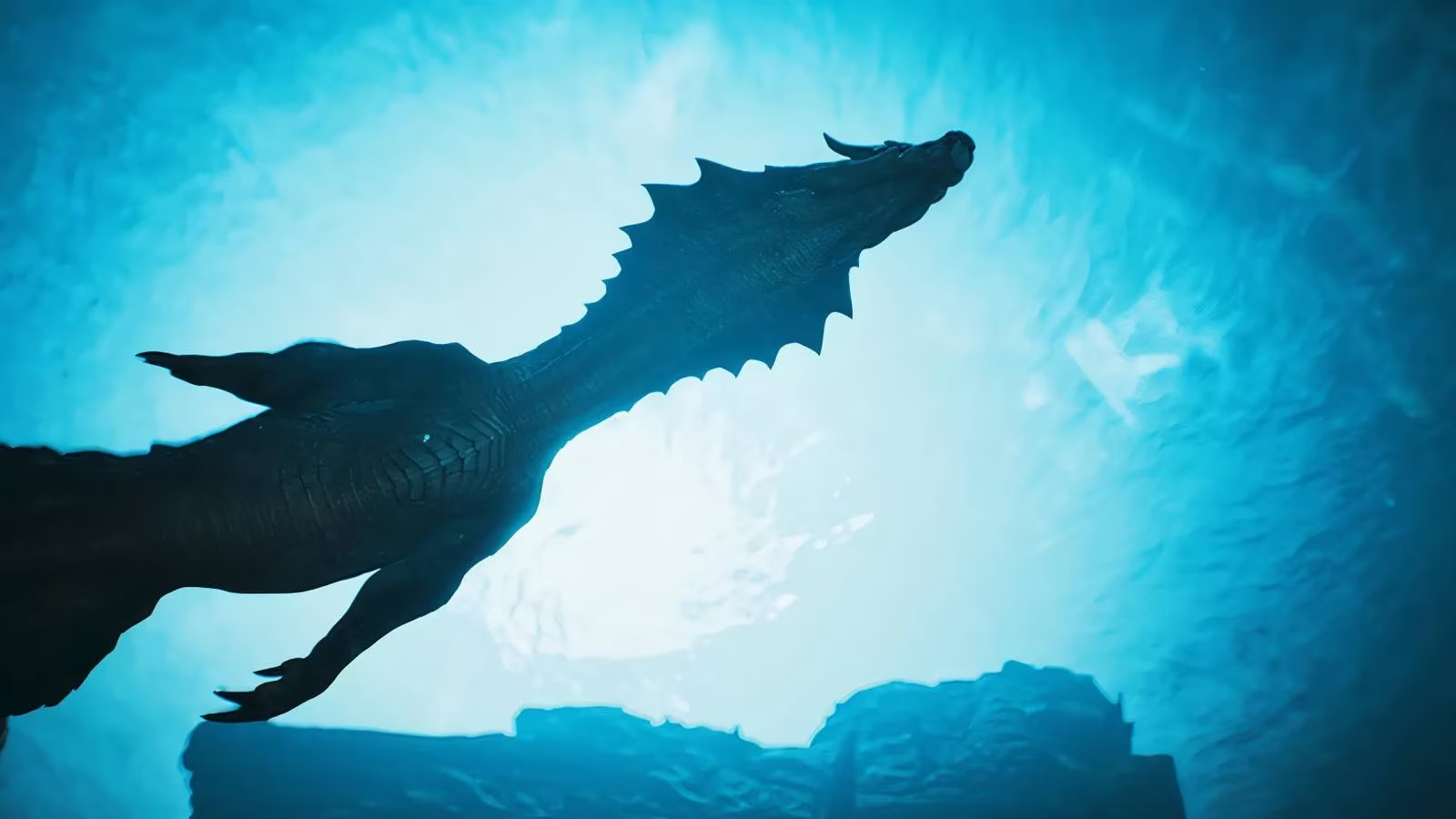
Just when the situation seemed its most dire, Capcom extended a lifeline. In a recent livestream showcasing upcoming titles like Pragmata and Resident Evil 9, the developer dedicated crucial time to Monster Hunter Wilds. The focus was the game's second major Title Update. While content for the update had leaked a week prior, the official confirmation brought two beloved monsters back into the fold: the electrifying Seregios and, more significantly, the leviathan Lagiacrus. The return of Lagiacrus was an open secret, datamined months before Wilds even launched, but its official announcement was more than just a monster reveal. For veteran hunters, it was a potential signal, a hint at a long-lost feature from gaming's past. Could this be the key to reviving the fallen title?
The Aquatic Elephant in the Room: Underwater Combat
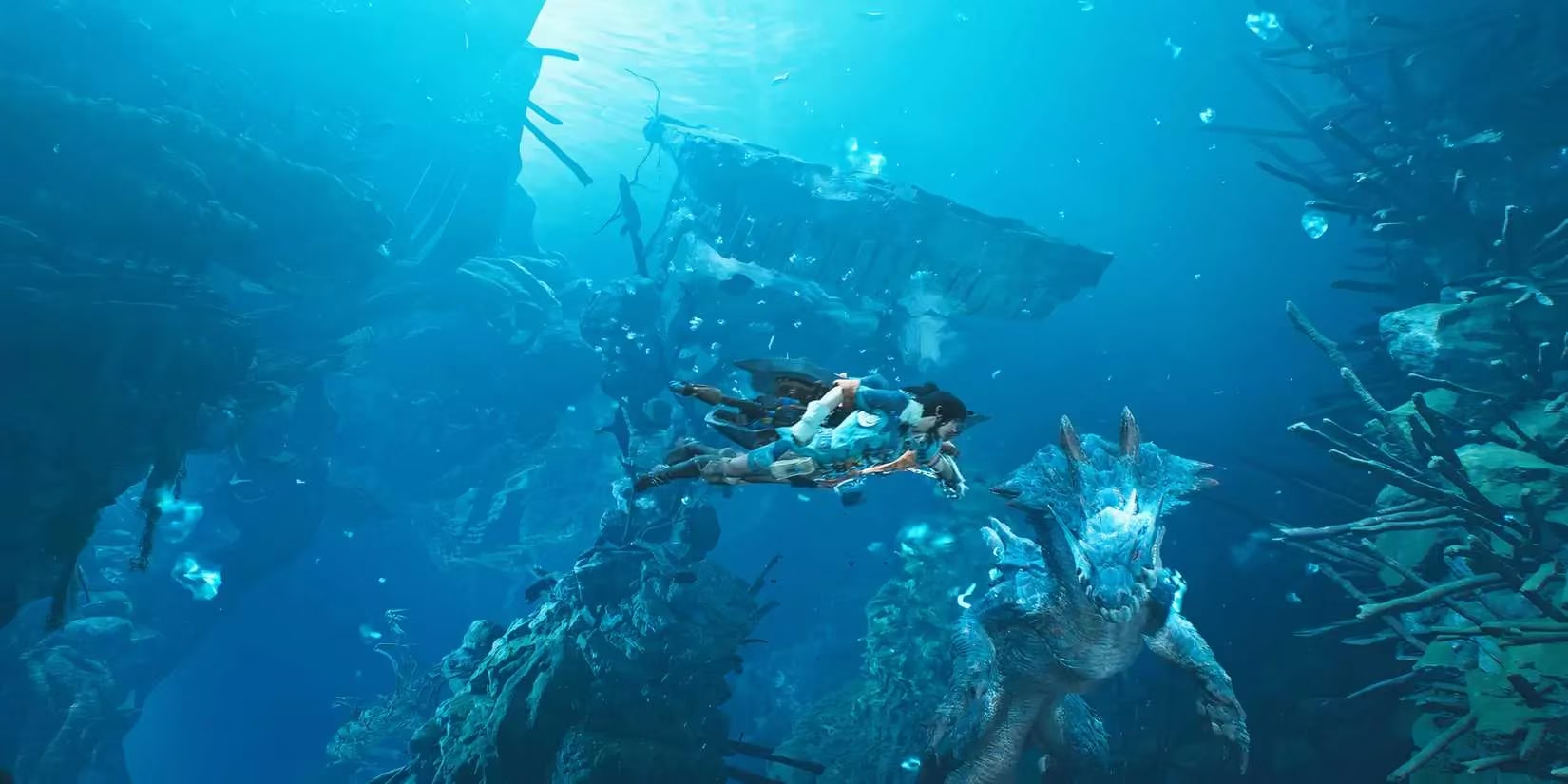
This is where speculation ignited the community. The official reveal trailer for Title Update 2 contained a brief, tantalizing clip: a hunter was shown swimming underwater, with the Lagiacrus gliding menacingly nearby. No combat was explicitly shown, but the implication was seismic. Underwater combat was a defining, and divisive, mechanic introduced in Monster Hunter Tri—the very game where Lagiacrus made its debut. The "Water Arena" of Tri allowed hunters to pursue aquatic beasts into their own domain, a feature that, despite its challenges, was remembered fondly by many. Its absence has been felt for over a decade. Now, fans are convinced this clip is Capcom's way of teasing its grand return.
The theory spread like wildfire across forums and social media. On Reddit, user DerpinTurtle posited a compelling idea: "I have a suspicion that Lagiacrus was withheld from the base game so that they could work on this, which while it's not the underwater combat 2.0 people were maybe hoping for, could serve as a prototype for MH7." Another user, Conradian, built upon this, suggesting it could be "the groundwork for an underwater-combat themed expansion." The community was suddenly alight with two burning questions:
-
Is Capcom testing the waters (literally) for a full revival in Monster Hunter 7?
-
Could this be the cornerstone of a massive expansion designed to save Wilds itself?
However, not everyone was ready to dive in headfirst. Some urged caution, remembering the words of Shintaro Kojima, assistant producer on Monster Hunter Tri. Ahead of Wilds' launch, Kojima explained the immense difficulty of reintroducing underwater combat, stating, "If the game already has ground-based battles, then [adding underwater combat] is like making a separate game. It’s difficult. It’s really, really hard." This led many to believe the underwater segment in the trailer might be just that—a small, contained area for a specific hunt, rather than a full systemic overhaul.
The Path Forward: Redemption or Prototype?
The potential return of underwater combat presents Capcom with a fascinating dual opportunity. For Monster Hunter Wilds, it could be the transformative, headline-grabbing feature needed to lure back the vanished 98%. Imagine the marketing: "Return to the depths. Hunt like never before." It would address the core content complaints and offer a completely fresh gameplay loop. The timeline of development suggests this might be possible; withholding Lagiacrus to perfect its aquatic environment is a logical, if ambitious, strategy.
Conversely, the feature could indeed be a cautious test for the next mainline installment. By introducing a limited version in a Title Update, Capcom can gather player feedback and technical data without betting the farm on an unproven mechanic in a new game. This safer approach would use Wilds as a public beta of sorts for Monster Hunter 7's potential flagship feature.
The community's hopes and theories can be summarized as follows:
| Theory | Description | Likely Impact on Wilds |
|---|---|---|
| Full Expansion 🎣 | Underwater combat as a major expansion theme. | ⭐⭐⭐⭐⭐ (Major revival potential) |
| MH7 Prototype 🔬 | Limited test for future game mechanics. | ⭐⭐ (Minor content boost) |
| One-Off Arena ⚔️ | A single underwater zone for Lagiacrus only. | ⭐ (Minimal long-term effect) |
As 2026 progresses, all eyes are on Capcom. The second Title Update for Monster Hunter Wilds is no longer just about two new monsters. It has become a pivotal moment, a test of whether the developer can listen to its community's deep-seated desires and technical criticisms simultaneously. Will they deliver the revolutionary underwater combat experience that could salvage their tarnished title? Or will they offer a mere glimpse, a promise for a future hunt? The hunter's mantle is on Capcom's shoulders now. They must navigate these treacherous waters carefully, for the fate of Wilds—and the trust of millions of hunters—hangs in the balance. The Lagiacrus isn't just returning; it might be leading the charge for the game's redemption arc, or simply swimming ahead to a brighter future in the next generation.