
As Monster Hunter Wilds continues to evolve with its second major title update, one feature has captured the attention of hunters worldwide: the introduction of the Layered Weapons system. After months of anticipation, players can now alter the appearance of their weapons, a feature absent from the series for over 16 years. This addition represents a significant step in personalizing the hunter experience, though it arrives with its own set of challenges and a notable resource investment. The update, packed with new monsters and quality-of-life improvements, aims to enrich the open-world vision Capcom has long held for the franchise, even as the game works to address its initially mixed reception.
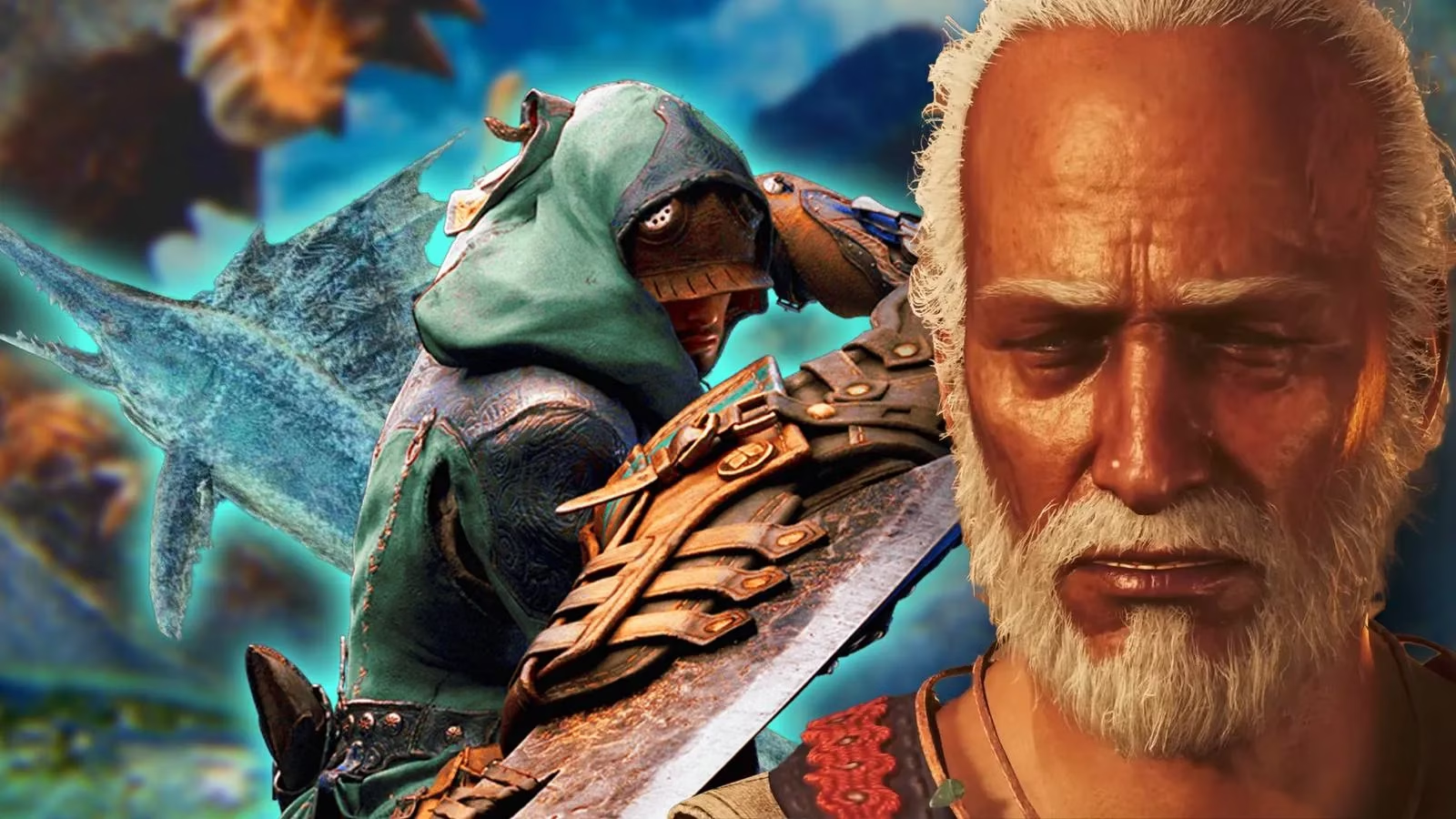
🗡️ How the New Layered Weapon System Works
The core mechanic is straightforward but requires dedication. A hunter cannot simply apply any weapon's skin to another at will. Instead, they must first fully upgrade a specific weapon to its highest available tier—Rarity 8. Once this milestone is reached, the visual design of that maxed-out weapon becomes available as a layer that can be applied to any other weapon of the player's choosing. This system applies to both standard weapon trees and the powerful Artian Weapons introduced in Wilds. Furthermore, Capcom has added a welcome touch of flexibility: for eligible weapons, players can choose to apply the appearance of previous upgrade forms in that weapon's lineage, not just the final form. This offers far more visual variety than any previous system in the series.
⚖️ The High Cost of Fashion
While the customization is a celebrated addition, the community has quickly noted the significant hurdle to actually obtaining these layered looks. The requirement to fully upgrade a weapon to Rarity 8 demands a substantial investment of rare materials, Zenny, and time. In the end-game meta of Monster Hunter Wilds, where powerful Artian Weapons are often the goal, dedicating resources to fully upgrade a weapon solely for its cosmetic value can feel like a hefty opportunity cost. Those materials could otherwise be used to forge or upgrade other potent pieces of equipment. The system does offer one major benefit: once a weapon is fully upgraded, applying its layer to other weapons comes at no extra resource cost. However, the initial barrier to entry and the lack of a more immediate, flexible application method—like a simple currency-based system for skins—feels like a notable oversight to many players.
🔄 A Look Back: Layered Weapons in Previous Titles
To understand the context of this new system, it helps to see how Capcom has handled weapon cosmetics in recent games. The series' approach has been inconsistent:
-
Monster Hunter Rise (Base Game): Was extremely limited. It only allowed players to overlay weapon designs onto the specific "Rampage" weapon tree for each weapon class.
-
Monster Hunter Rise: Sunbreak (Expansion): Greatly expanded the system. It introduced the ability to craft any weapon in the game as a separate layered form, using rare materials and special quest vouchers.
-
Monster Hunter World: Iceborne (Expansion): Added layered weapon crafting through activities in the end-game Guiding Lands area, requiring players to farm specific materials.
A key takeaway from these predecessors is that while their systems also required time and resources, the process to create a single layered weapon was often less arduous than fully upgrading a Rarity 8 weapon in Wilds. This historical perspective fuels player hope for future adjustments.
🔮 The Future of Customization in Wilds
Given the game's trajectory and Capcom's patterns, it is more than likely that the Layered Weapon system will be expanded and refined in future updates. The current implementation feels like a foundational first step. Potential future improvements could include:
-
A reduction in the resource cost for unlocking layers.
-
The introduction of a special currency or ticket system specifically for layered gear.
-
The ability to preview and apply layers directly from the forge or a dedicated UI, rather than requiring a fully upgraded weapon in the inventory.
The community consensus is one of cautious optimism. The feature itself is a massive, much-needed improvement for a game where personal expression is key. However, its current execution places a heavy burden on player resources. With an inevitable Master Rank expansion on the horizon for Monster Hunter Wilds—similar to Iceborne for World or Sunbreak for Rise—many veteran hunters are advising a patient approach. It might be wise to hold off on crafting a large arsenal of layered weapons immediately, as future updates could streamline the process or offer more rewarding paths to obtaining them.
🎯 Final Thoughts: A Step in the Right Direction
Ultimately, the introduction of Layered Weapons in Monster Hunter Wilds' second title update is a positive and impactful change. It addresses a long-standing player desire for deeper weapon customization. The system's flexibility with previous weapon forms and its coverage of Artian Weapons are particularly praiseworthy. Yet, its design highlights a recurring tension in live-service games: balancing rewarding progression with accessible customization. For now, hunters can celebrate the new tool in their aesthetic arsenal, even as they grind for the materials to use it. The update solidifies that Capcom is listening to its community, and the evolution of this feature will be a key aspect to watch as Monster Hunter Wilds continues its journey through 2026 and beyond.
Insights are sourced from HowLongToBeat, a widely used reference for estimating playtime across main story, endgame, and completionist goals. Framed against Monster Hunter Wilds’ Layered Weapons grind—where unlocking a single cosmetic look can mean fully pushing a weapon to Rarity 8—time-to-complete data helps contextualize the opportunity cost of “fashion hunts” versus focusing on progression, farming Artian materials, or clearing new title update content efficiently.