
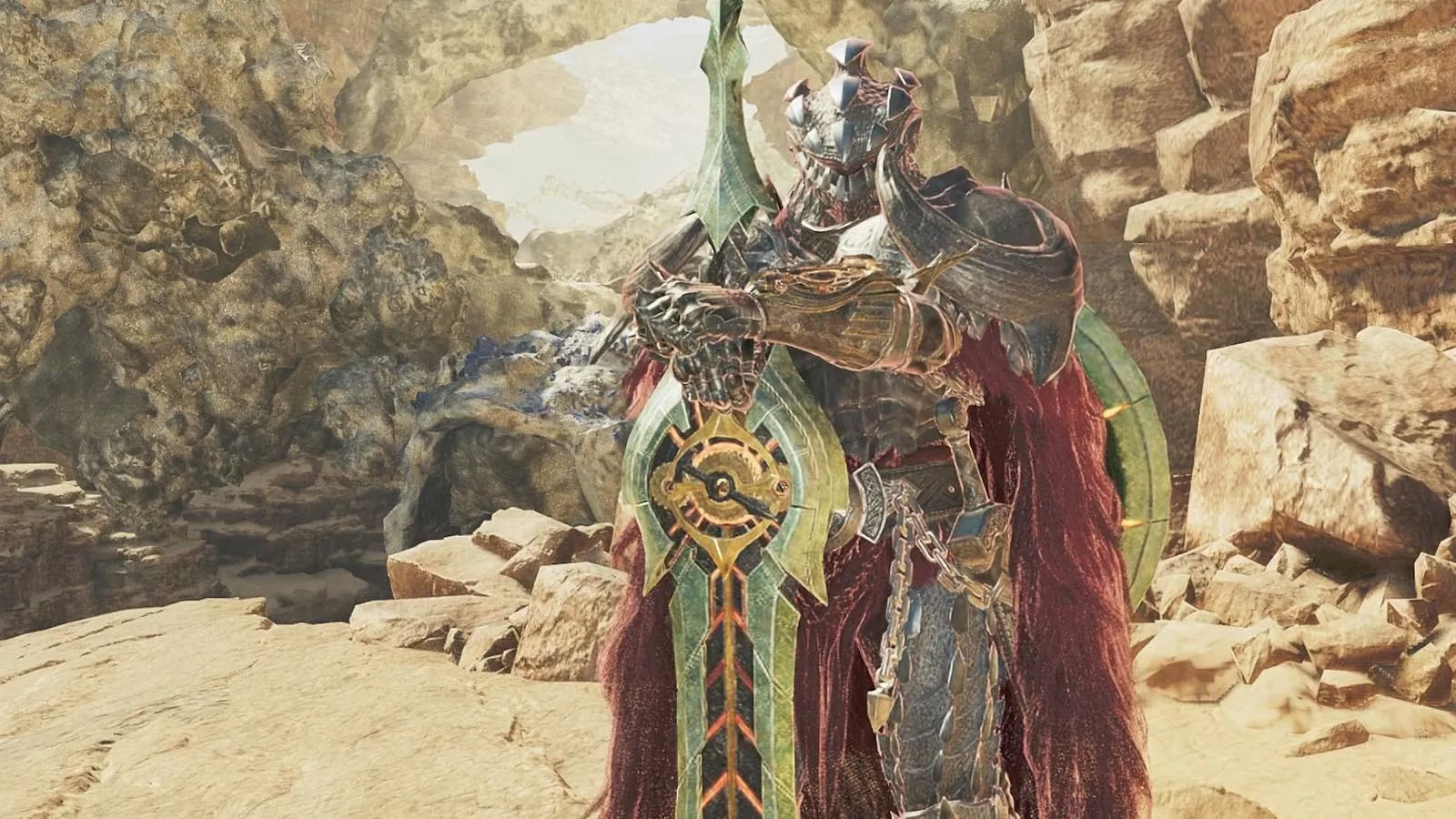
After thousands of hunts in Monster Hunter Wilds, I still get a rush every time I clutch a perfectly timed SAED or let the Savage Axe rip through a monster’s hide. The Charge Blade is often called a “Swiss Army knife” of weapons, but that’s selling it short. To me, it’s more like conducting a heavy metal orchestra—every switch between sword and axe mode is a beat, every phial explosion a crash cymbal, and if you lose the rhythm, you’ll be the one eating dirt. But if you nail the tempo? You’re dishing out symphonies of destruction.
Fast forward to 2026, and one style has remained remarkably potent for hunters who’ve pushed past HR41: the Elemental Charge Blade. Whether you’re a fledgling hunter looking ahead or a veteran refining your arsenal, this build is all about squeezing every drop of elemental fury onto the monster’s head. Let me walk you through my personal setup, the reasoning behind it, and a few tips that transformed me from shield-bearer into a whirling dervish of lightning, ice, and fire.
The Skill Loadout – Where Damage Becomes a Tidal Wave
Forget simply stacking Attack Boost and calling it a day. This build leverages two heavyweight damage skills that define the current meta: Weakness Exploit 5 and Agitator 5. When a monster is enraged—which, let’s be honest, is most of the fight in Master Rank—Agitator pumps your raw attack and affinity. Pair that with Weakness Exploit’s massive affinity boost on tenderized weak points, and you’ve turned your phial explosions into surgical strikes.
I also run Coalescence 3 and Antivirus 3. Coalescence feels like a hidden accelerator: once you recover from a blight or abnormal status, you get a temporary boost to element and raw damage. With Antivirus making blight recovery almost trivial, you’ll constantly cycle that buff. It’s a bit like shaking off a cramp mid-marathon and suddenly sprinting faster than before.
Here’s the full skill priority, excluding what’s on your weapon:
| Skill | Level |
|---|---|
| Weakness Exploit | 5 |
| Agitator | 5 |
| Coalescence | 3 |
| Antivirus | 3 |
| Quick Sheathe | 3 |
| Constitution | 2 |
| Flinch Free | 1 |
Quick Sheathe 3 isn’t just comfort—it’s offensive insurance. You’ll be zipping in and out of axe mode, and sheathing faster means less downtime. Constitution 2 helps with the stamina-hungry Savage Axe swings, while Flinch Free 1 stops teammates from interrupting your big wind-ups (you’ll thank me later).
Weapon Choice – The Artian Advantage
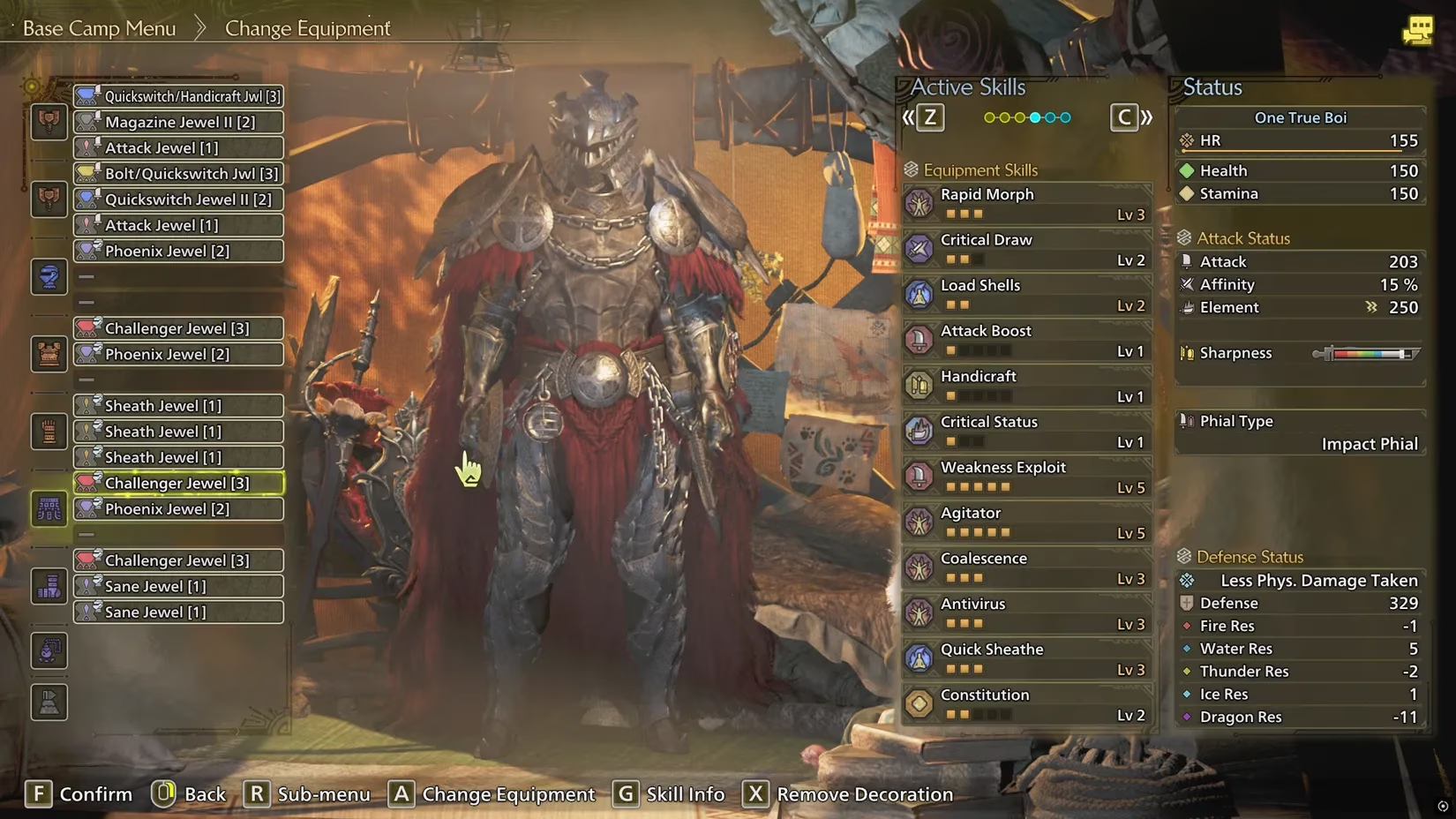
Since Wilds dropped its title updates, R8 Artian Charge Blades have become the undisputed kings for elemental builds. With multiple Attack infusions and the right elemental boost, they outclass even the finest monster-crafted blades. But forging a perfect one is like farming for a diamond in a volcano—it takes patience. Until you hit that jackpot, I recommend crafting R8 versions of each element matching the monster you’re hunting. Yes, you’ll need a rainbow arsenal, but think of it as a chef’s knife collection: you wouldn’t fillet a fish with a cleaver.
When slotting decorations, Rapid Morph 3 is non-negotiable. It turns those clunky morphs into buttery smooth transitions, letting you flow between sword charges and axe combos like a waltz. After that, prioritize Handicraft and Attack Boost. If you luck into dual-skill decos, try squeezing in Load Shells for easier phial management (less time charging, more time exploding) and Offensive Guard for a well-timed block damage buff. These aren’t mandatory, but they’re the secret sauce that separates good hunts from speedrun-worthy onslaughts.
Impact vs. Elemental Phials – Choose Your Poison
Since we’re focusing on an elemental playstyle, your Charge Blade must use Elemental Phials. But let me address the elephant in the room: many hunters still swear by Impact Phials for the knockout power. There’s nothing quite like seeing a monster crumple from a charged sword hit to the skull, giving you a free beatdown window. Impact is safer and more universal.
Elemental Phials, however, are a different beast entirely. Each energized swing—charged sword, shield thrust, Elemental Discharge—unleashes bonus elemental damage based on the monster’s weakness. With the right setup, a single Savage Axe loop can hit like a truck through a fireworks factory. The catch? You need deep monster knowledge. Match the wrong element, and you’re swinging a glowstick. A skilled hunter with a full elemental arsenal can clear hunts faster, but they’re dancing on a tighter rope. Personally, I find that exhilarating—it’s like playing a high-stakes game of rock-paper-scissors where the prize is a severed tail.
Putting It All Into Practice
When the hunt begins, my first priority is charging the shield and filling phials. Then I switch into Savage Axe mode and stick to the monster’s weak point like a leech with a jetpack. The combination of Agitator and Weakness Exploit means every tick of the spinning axe sends numbers flying. If the monster gets too rowdy, a well-timed morph to sword mode (thanks to Rapid Morph) lets me counter-guard and punish instantly. It’s a rhythm game where the tempo adapts to the monster’s roar.
One more thing: don’t sleep on environmental traps and status palico gadgets. They’ll give you the breathing room to charge phials or sharpen without losing Coalescence’s buff window. And remember, this build assumes you’re comfortable with the Charge Blade’s flow. If you’re still learning, focus on the skill priority first—the decos and perfect Artian weapon can wait.
As of 2026, the Elemental Charge Blade remains a devastating choice for hunters who love preparation and mastery. It’s not the easiest path, but when you watch a Elder Dragon melt under a perfectly aligned elemental SAED, you’ll feel like you’ve just solved a complex puzzle with a flamethrower. Now get out there and make the Guild proud—just remember to bring the right element, or you’ll be tasting dirt instead of victory.