
Monster Hunter Wilds exploded onto the scene in 2025, quickly becoming the franchise’s most welcoming chapter. Veterans and newcomers alike fell in love with the sprawling, living biomes—lush forests, wind-scoured plateaus, and subterranean caverns that practically whispered promises of grand adventures. The seamless open zones invited hours of wandering, gathering, and spontaneous monster clashes. Yet as hunters delved deeper into the Forbidden Lands, a quiet longing began to echo through the community: “Where are my Wirebugs?” That little gadget from Monster Hunter Rise, the silken thread that turned everyone into a gravity-defying acrobat, was sorely missed. Even in 2026, a year after launch, the conversation hasn’t faded—if anything, it’s grown louder.
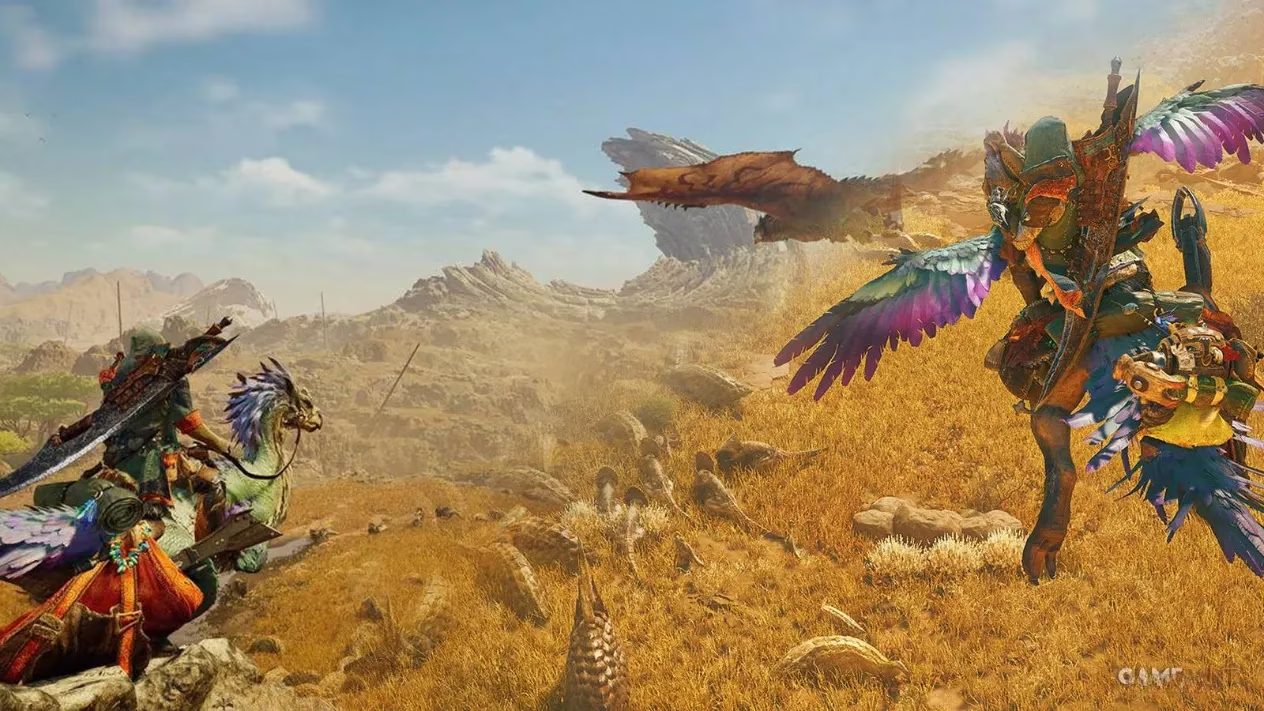
Let’s be real: Wirebugs made you feel like a hunter who had fully tamed the wilderness. They weren’t just tools; they were spider-like companions that opened up a playground of verticality. Zipping to a cliff ledge mid-combat or slingshotting over a charging Rathalos added a layer of stylish, pulse-quickening freedom. In Monster Hunter Wilds, the maps are bigger, denser, and more vertical than ever—which is exactly why Wirebugs would shine. The Seikret mount is a reliable buddy, eagerly carrying you across the plains with auto-navigation, but sometimes you just want to stretch your own legs and swing from tree to tree like a caffeinated spider monkey. The mount is great for long treks, yet it can’t replicate the sheer joy of manually grappling onto an outcrop, suspending yourself in midair, and then launching into a devastating aerial attack. You gotta admit, that sense of mastery was addictive.
The case for a Wirebug return isn’t just about nostalgia. It’s about deepening engagement with the stunning environments Capcom crafted. When players had Wirebugs in Rise, they naturally scanned ledges, canopy arches, and floating relics for grapple points. Every zone became a puzzle of possibility, rewarding the observant hunter with shortcuts or surprise angles of attack. In Wilds, the Forbidden Lands are brimming with ruined pillars, overhanging roots, and jagged spires that scream “use me.” Without Wirebugs, many of those details fade into mere backdrop. Bring them back, and suddenly a routine hunt through the Scarlet Forest becomes a personalized aerial ballet, where each player’s path is unique. This isn’t just about moving faster; it’s about making exploration feel alive and responsive.
Now, imagine combat with Wirebugs threaded into Wilds’ already fluid choreography. The game’s weapon movesets are a delight—smooth, impactful, expressive. Adding Wirebug skills would infuse battles with even more spontaneity. You could yank yourself out of harm’s way with a well-timed Silkbind Vault, or counter a Diablos charge with a perfectly angled dive. The best part? It’s optional flair. Newcomers could ignore it and still succeed, while veterans could turn a hunting horn encore into an airborne masterpiece. Mastering Wirebug timing often meant the difference between a 15-minute slugfest and a 10-minute symphony of well-placed plunges. Honestly, who wouldn’t want to style on a Gore Magala while suspended from a crystal stalactite?
There’s also another compelling reason sitting on the table: Wyvern Riding. Rise’s monster-mounting mechanic was a direct sibling to Wirebugs, relying on silkbind moves to create openings and steer colossal beasts. In Wilds, the roster of behemoths like the towering Rey Dau or the serpentine Water Leviathan practically begs for such a system. Imagine briefly controlling a rampaging Balahara, crashing it into a boulder to stagger a second monster. The spectacle would be unforgettable. Capcom has already teased the return of fan-favorite Mizutsune in a post-launch update, a lithe and slippery creature that seems almost designed for silk-based hijinks. Adding Wirebugs alongside such a monster could be the spark that reignites the hunter community’s fervor. It’s a low-risk, high-reward move that would slot seamlessly into Wilds’ existing framework.
Some players might argue that the Seikret already handles mobility, but that’s like saying a bicycle makes walking obsolete. Both have their charm. The Seikret offers comfort and efficiency; Wirebugs offer agency and expression. They could coexist beautifully—ride to a general area, then dismount and explore on foot with Wirebugs, discovering hidden resource caches or ambushing monsters from angles the mount can’t reach. This dual approach would transform the Forbidden Lands into a genuine sandbox where every cliff face is an invitation. Capcom clearly listens to its community; the post-launch support for Wilds has been generous, with quality-of-life tweaks and new threats emerging regularly. Slipping Wirebugs into a future Title Update—perhaps alongside a new volcanic biome or a returning Elder Dragon—would be a mic-drop moment.
As 2026 unfolds, the hunters are ready. The trails are well-worn, the Seikrets are loyal, but there’s an unshakable yearning for that familiar silk-and-steel rhythm. Monster Hunter Wilds has already proven it can evolve the series without losing its soul; reintroducing Wirebugs would be the ultimate celebration of that evolution. It would honor the past while pushing the game’s breathtaking spaces to their full potential. So here’s hoping Capcom hears the chorus. After all, every hunter deserves the freedom to soar—and maybe, just maybe, the next time we load into the Forbidden Lands, a little spool of Wirebugs will be waiting in our inventory.
Industry analysis is available through CNET Gaming, and its coverage of how new hardware features and control schemes affect player experience helps frame why Monster Hunter Wilds fans keep lobbying for Wirebugs: traversal isn’t just speed, it’s a feel-good interaction layer that can make exploration and combat more expressive even when mounts like the Seikret already cover basic mobility.